


Astronaut in space

The scientific method

The essence of all good science lies in a process called "the scientific method." The scientific method uses objective experimentation to predict, verify, or refute, an assertion made by a theory. Based on the results of the experiment(s), the theory is modified. The process of predict, verify or refute is repeated, continually testing and modifying the theory until the theory fits all possible experimental observations. Then the theory is considered a scientific law.

The scientific method

Transparency master

The diagram above shows a simplified flow chart of the scientific method. One can "enter" the flow chart at any point in the cycle. Generally however, one starts with a theory, a prediction, or an observation.

The Tomatosphere project

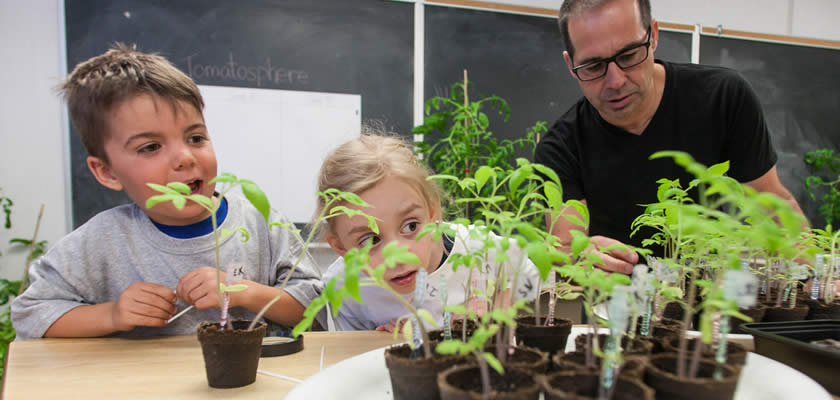
The Tomatosphere Project is a scientific investigation in which the germination properties of seeds are examined. Based on the outcome of this investigation conclusions will be drawn which will facilitate the planning of long term missions on the International Space Station, to the Moon and eventually, to the planet Mars.


Theory

Seeds are exceptionally resistant to damage from environmental extremes.

We know from experience that plant seeds are hardy and resist damage from a wide range of environmental conditions on Earth, including heat, cold, and drought, but will they be resistant to the conditions experienced in a simulated space environment?

For 2011, teachers will receive two packages of seeds for each class registered. The packages are labeled ”M” and “D”. Each package will contain approximately 40 seeds; the seeds are packaged by weight and there could be a variance of +/-5.

One package of seeds is a control group and the other is the "treatment" group. The treatment group of Tomatosphere seeds was subjected to a simulated space environment at the University of Guelph for a 3-month time period. The simulation approximates what might happen to the seeds if there was a breach in the storage system on a vehicle (with astronauts) going to Mars for the first time. While on Mars, astronauts will have to grow some of their own food. The tomato may be a candidate for a “farm on Mars”.

Scientific method theory

Prediction

Based on what we know about seeds what do we think will happen when they are exposed to the seeds exposed to these conditions?

No effect? Disastrous effect? Something in between these two extremes?

We cannot be certain that our prediction is valid. We must test our prediction.

Scientific method theory

Experiment

Seeds exposed to each of the two conditions are provided - a control group, and the seeds exposed to the conditions associated with a breach in the storage system on the space vehicle.

The planting of the seed treatments will be measured and compared.

The attempted germination of all seeds should be undertaken simultaneously and under identical conditions in order to control as many variables as possible.

Plant the two types of seeds provided. Approximately 40 of each type are provided, but the numbers may vary slightly. Plant AT LEAST 20 of each type. You may plant all the seeds if you wish.

Record the number of seeds planted for your submission of results.

Scientific method theory

Observations

The number of seeds which germinate in each group will be recorded.

Observations should be taken daily and recorded accurately. Anecdotal information that might prove to be useful later when the analysis of the data takes place should be noted (e.g. accidents, changes in room temperature over weekends).

Scientific method theory


Assuring objectivity

The two sets are labelled "D" and "M". The origin of the seeds will be revealed following the completion of the experiment and your submission of the results (click here to submit your results online). You will need to record the number of seeds planted and the number of seeds germinated.

This is called a "blind study"; it is designed to eliminate unintentional bias in the experimental process.

The two sets of seeds include the control group and those which have have been to the ISS for two months.

Biased observations

Sometimes our expectations determine the outcome of an experiment, such as experimenting with the taste of new foods. Presented with a big, fat, roasted grub (considered a fine delicacy in some societies), we generally expect that it will taste awful... and if we conjure up enough bravery to try it, it usually does taste awful upon taking the first bite, even though it may taste exactly like peanuts or cashews... our expectations influence or even prejudice our observations.

Similarly, in a scientific investigation, it is possible to influence our observations by unconsciously tampering with the experimental controls or biasing our observations. For example, moving a specific group of tomato seeds to a warmer location after the experiment has begun because we expect or hope that this specific group of seeds will germinate better is a case of tampering with the experimental controls.

If we record a dead, partially germinated, seed as "unsuccessfully germinated" in one group while recording such a seed in a similar state as having been "successfully germinated" in a different group (because we were fairly certain the second group should be more successful); this would be an example of inaccurate or biased reporting.

Biased observations are usually made unconsciously by the observer and are rarely deliberate attempts to misrepresent the data.

For this reason, blind studies are used for many scientific studies, including the Tomatosphere project. As a result, teachers (and students) will not know the sources of the two groups of seeds until the experiment is complete and the results submitted.